What should we take away from the 22nd ILC in July?
We asked experts from across the leprosy world and across different disciplines.
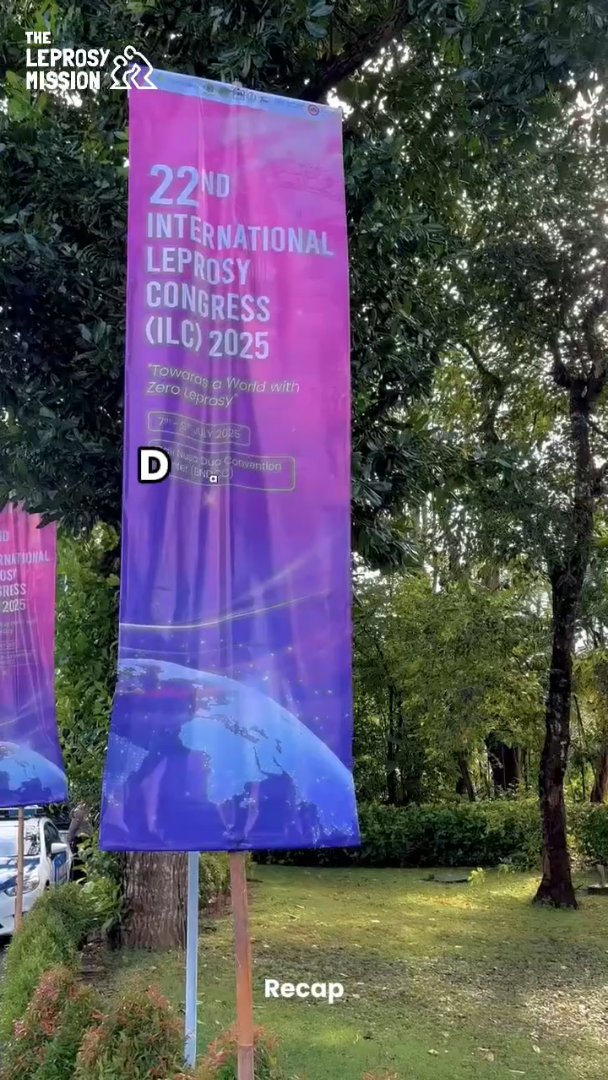
The 22nd International Leprosy Congress took place in Bali, Indonesia in July 2025. It was a major gathering of the world’s leprosy experts and in this article, we’re going to see perspectives from people who were at the Congress to hear what stood out for them, what the congress tells us about the state of the leprosy sector today, and the perspectives of persons affected by leprosy following this Congress and ahead of the next Congress in Brazil in 2028. Each page shows the names and faces of those who answered the questions posed.
I think the best news was the potential use of a new drug for leprosy treatment - Telacebec. It has a very good effect in leprosy within a short period of time, most likely the shortest duration among currently available drugs for leprosy treatment. Leprosy bacteria will be killed within the first few days and the full course is only two-months. The safety of the drug has already been checked in patients with TB.
The research team from America is willing to collaborate with TLM and we could be part of further research on the effectiveness in leprosy treatment. The most important concern at this point is the funding for new trials.
Two other exciting developments:
TrueNat RT (Real Time) PCR, a field-based diagnostic for leprosy presented by Dr Itu Singh is another interesting discovery. This test provides an easy diagnosis of leprosy in the field within an hour. The procedure is much simpler than usual PCR procedures, so it is easy to use in the field. Read more here >
Biomarkers test for leprosy diagnosis: TLM Nepal and Bangladesh, in collaboration with Prof Annemieke, are undertaking this research under the "2B or not 2B" project. This test can be performed within 20 minutes in the field, like a Covid Antigen test or Pregnancy test. A drop of finger prick blood can be used to detect the presence of biomarkers. Read more here >
The ILC in Bali was well-attended and provided a great opportunity for colleagues to meet. Many multi-centre studies are under way, and many of those involved do not have any other opportunity to meet physically. The Congress was therefore an important means of strengthening global collaboration.
Research presentations are the core of the Congresses, and there were some impressive results displayed in Bali, especially from new researchers. However, it is always difficult to locate the best presentations when they are hidden amongst so many parallel sessions! The only negative comment from my side is that the plenary sessions generally did not present the best and brightest side of current research - a challenge for the organizers of Rio 2028!
Collaboration goes well beyond research, of course, so efforts to fight stigma, to build community resilience, to improve the prospects for rehabilitation, etc., are all strengthened by meeting together. Similarly, the new framework for elimination developed recently by WHO was highlighted, with its call to improve data management and intensify fieldwork by thousands of health workers (especially active case-finding, linked to PEP).
What distinguished the ILC2025 for me was a number of aspects.
The location was far for many delegates, yet there was still a very good attendance. The venue was very suitable and meeting rooms were easy to find and accessible, in contrast to the previous ILC. What struck me was the large number of young scientists, also from Indonesia, showing a keen interest in leprosy. Also the high number of persons with lived experience attending the congress was very encouraging.
What stood out most were the pre-congress and post-congress meetings, but also side meetings during the congress itself. Organisations made very good use of the opportunities offered by the ILC. Notable meetings were the SHF-sponsored Global Forum of OPLs, the Indonesia-focused research meeting, the various TLM-organised workshops, the Novartis-sponsored PEP symposium, the Telacebec side meeting, and the ILEP Technical Commission and GPZL meetings after the congress.
All in all, attending ILC2025 was well worth the effort and cost. We came away with renewed energy and commitment. We look forward to the opportunities offered by ILC2028 in Rio de Janeiro!
Our country, Brazil, has a young democracy. We emerged not long ago from the dark years of military dictatorship. Currently, our democracy is under heavy attack by political actors who want to destabilise the democratic rule of law. However, Brazilians have learned to exercise their rights and fight vigorously to maintain these freedoms. For these reasons, the International Hansen's disease Congress (ILC) must understand and adapt to the needs of the Brazilian people. Brazilians and foreigners in our country will always be treated with dignity and respect.
For this important moment in the history of Hansen's disease worldwide to happen in the way Brazilians usually organise their events, we will have to think deeply about organising this event. The ILC is a scientific event in terms of its political organisation, but for several years, people affected by the disease have been included in this context. To differentiate this event in Brazil, the organising committee will have to consider creating an intelligent and safe environment for this specific audience.
Effective participation of affected people in all topics
Side event to discuss health policies and stigma
Safe, clean, and organised environments according to the needs of affected people, especially for meals.
A room for minor medical procedures, should some participants require them.
Involve the Ministries of Tourism and National Security in ensuring a pleasant stay for participants in our country.
The drafting and reading of a letter of commitment from the Brazilian government to those affected by the disease is extremely important, given that Brazil ranks second in the world in absolute cases of the disease.
As a person affected by leprosy, I found hope in ILC 2025 because it brought greater visibility to the voices and experiences of people affected by the disease. The discussions on inclusion, the fight against stigma, and the strengthening of OPLs showed a genuine willingness to move toward a more human-centered and participatory approach.
However, I also felt some frustration. People affected by leprosy are still not sufficiently involved in the organisation of the ILC or in the decision-making processes. Their participation remains mostly symbolic, whereas they should be at the heart of discussions and actions. In addition, access to information is not always adequate: the lack or limited availability of translation into different languages makes it difficult for many participants to fully understand and engage.
For the ILC to be truly inclusive, it is essential to ensure real representation, equitable access to information, and a central role for those directly concerned.
At the 22nd ILC, research on social determinants of health provided important understandings and insights into leprosy management.
A notable session on Research Recommendations (July 8, 2025) emphasised mapping social determinants like poverty, gender disparities, and geographic isolation, which significantly influence leprosy prevalence and treatment access. For instance, a study from Sri Lanka highlighted that 33% of female leprosy patients faced delayed diagnosis due to stigma and limited healthcare access, leading to higher deformity rates. Additionally, my presentation, "Towards Zero Leprosy and Discrimination: Climate-Adapted and Gender-Inclusive Advocacy for Bangladesh," underscored how climate-related barriers (e.g. 78% of patients reporting delayed treatment due to floods) and gender gaps (e.g. 55% perception gap in healthcare access for women) exacerbate challenges.
Looking ahead to ILC 2028, I’d like to see more research on intersectional approaches, particularly how climate change, gender, and socioeconomic factors interact to impact leprosy outcomes. Studies focusing on scalable, community-led interventions to address these determinants, alongside longitudinal data on stigma reduction, would further strengthen global elimination efforts.
The Innovation We Need: Field-Friendly Slit Skin Smear alternative
At ILC, the Brazilians had many interesting contributions. They were challenging our understanding of what we mean by “early diagnosis”. Are there maybe some earlier neurological signs that we could pick up, as they demonstrated with the AI based questionnaire as well as the neurological studies? Brazilian studies also indicate that more than 30% asymptomatic contacts have positive qPCR from Slit Skin Smear (SSS) samples—challenging our understanding of "early diagnosis."
Traditional SSS capacity is fading globally. We may need a more field-friendly sampling tool as a replacement for SSS that would be supportive of using PCR increasingly for studying asymptomatic infection's hidden role in leprosy transmission while making early detection truly accessible.
The congress brought together more than 1,200 participants, including researchers, health professionals, policymakers, and persons affected by leprosy. As highlighted by Indonesia’s Minister of Health, significant progress has been made in developing the knowledge and tools needed to eliminate leprosy. What is required moving forward is sustained political commitment, long-term investment, and inclusive collaboration to ensure that evidence translates into action.
One of the most inspiring aspects of the congress was the strong inclusion of persons affected by leprosy. Their voices reminded us that eliminating leprosy must go hand-in-hand with implementation of research findings to eliminate stigma and continued evidence building for improved management of reactions. Equally encouraging was the growing engagement of early-career researchers.
However, there is room for improvement. Continued investment is needed to strengthen research capacity in endemic countries, ensure sustainable funding, and bridge the gap between research findings and policy implementation.
In summary, leprosy research today is defined by strong expertise, renewed energy, and a collaborative spirit.
As usual, ILEP member staff and partners were very much involved in this year’s International Leprosy Congress. The sheer number of oral and poster presentations demonstrated the ongoing high level of scientific endeavour in leprosy. Especially notable were the reports on studies into potential new treatment drugs for leprosy (Bedaquiline and Telacebec), the use of the anti-inflammatory drug Dovramilast for ENL reactions, which remain one of the most frustrating challenges in leprosy case management, and the many positive presentations on post-exposure prophylaxis both with rifampicin and with new, potentially more robust, preventive regimens.
The number of presentations on potential diagnostic tools reflected the wide range of work going on in that field compared with three years ago. Similarly, the presentations around leprosy in children gave this issue more prominence than in 2022, partly reflecting its inclusion in the WHO Global Leprosy Programme’s current priorities. But to me, the most striking, visible change since the previous Congress was the vastly increased presence of persons affected by leprosy, who numbered 10% of participants and were active participants in almost all sessions – as co-presenters, panellists, research contributors, or audience members asking probing questions. Warm appreciation goes to all the stakeholders who advocated, provided funding, and in other ways enabled this.
A moment that stood our for me at the ILC 2025, was at the beginning of a presentation given by Brima Kpeh. Brima is a leader of the organisation of persons affected by leprosy in Sierra Leone. He quickly remembered the themes of the last 3 ILCs. In Manila, in 2019 it was “Global Partnership in addressing current challenges”. “Better Knowledge - Early diagnosis – Improved care" was the theme in Hyderabad in 2022. Bali 2025 proclaimed “Towards a word with Zero Leprosy”. Brima then asked in a somewhat sarcastic yet reflective voice, what theme would be chosen for 2028.
My reflection on this very powerful moment is that we can and we should have great aspirational goals, but we should never forget how they might sound and feel to the people on the ground. I wish for a leprosy community that is aspirational, yet very firmly grounded in the realities of our world. May people like Brima and other persons with a lived experience guide us in this journey.
It’s been an academic feast, and I saw a lot of interesting presentations. However, I feel it has been very heavy on early detection, transmission and on clinical aspects of leprosy. As we all know, leprosy is a disease of a person and holistic care is needed. If we want to make a difference in the life of a person, we can’t focus only on the clinical and physical. We must also focus on the social, mental/psychological and economic aspects. These should all be discussed and policies reviewed based on these aspects. I feel like there was a lack of discussion around non-clinical areas, that meant some people were left out of the conversation and less represented. There were very few mental health, livelihood and disability studies that were represented orally. Yes, there were some, but I would have liked to see a more holistic conference overall that touched on all aspects of the lives of people affected by leprosy.
One of the highlights of this conference was inclusive research, which enabled people affected by leprosy to present. This was amazing, I looked forward to it and they did very well. In the coming years, I would like to see more research conducted by people affected by leprosy. This allows people with lived experiences to bring more research to the leprosy table. This aspect of the conference touched our hearts a lot.