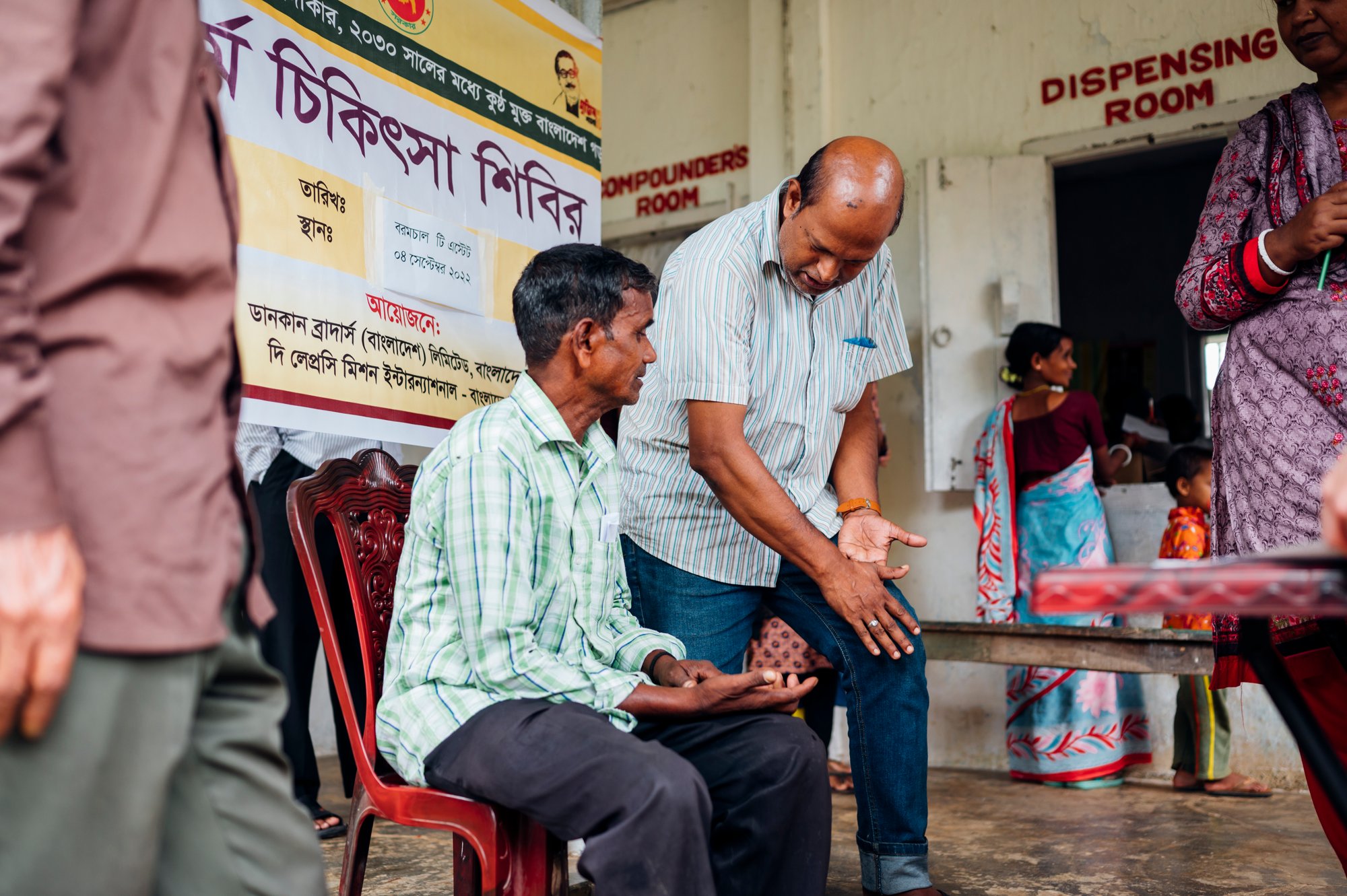
"There is no endless money tree available for active case finding , so we need to be smart with how we use our money. Training members of the community and including them in the active case finding programmes that we fund is a must.
"We can also make our expertise available to government health services. Training and retraining will be essential for them, but even then a doctor can be reluctant to diagnose leprosy because they have no diagnostic test. Our team in Bangladesh have an innovative solution for that. In those cases, government doctors can contact our leprosy specialists via the phone or messaging to get a second opinion. That can prove to be the difference between someone receiving their MDT or not.
"We also need to find flexibility outside of our project funding. If we fund active case finding in a community for two or three years, we should set aside a small amount of budget for our teams to revisit the community in the following years to follow up and provide fresh impetus to the community members who are responsible for active case finding.
"Lastly, there is so much fear around leprosy still. People are afraid to be diagnosed with disease and afraid that others will find out. We can have all the funding in the world, but if we do not help people beyond their fears, we will be wasting our money. Being screened for breast cancer used to be a taboo thing, but that's not the case anymore because so many organisations broke down the stigma. Community and faith leaders can help us to do that for leprosy, too.
“Around every corner, active case finding will present us with a new challenge, but around the next corner we will find a new solution. Whatever the challenges and solutions, active case finding is non-negotiable if we want to end leprosy transmission. If we invest in communities and are smart with our money, we will get there.”